Do Indoor Plants Need Sunlight? A Beginner’s Guide to Light, Low-Light Plants & Plant Placement
If you’re new to houseplants, one of the first questions you’ll probably ask is: do indoor plants need sunlight? It’s a fair question because a lot of people assume every plant needs direct sun to survive. In reality, indoor plants need light, but not all of them need harsh direct sunlight.
Some plants love bright windows, some do best in soft indirect light, and some are known as indoor plants that need no sunlight because they can tolerate very low-light rooms better than others. The key is understanding the difference between direct light, indirect light, and low light so you can place each plant in the right spot.
In this guide, we’ll answer the most common sunlight questions in a simple Q&A format, explain how much sunlight does indoor plants need, and help you choose the best low light plants for bedrooms, apartments, and darker corners of the home.
Quick Answer: Do Indoor Plants Need Sunlight?
Yes, most indoor plants need some form of light to survive and grow, but not all indoor plants need direct sunlight.
Many houseplants grow best in bright indirect light, which means they get plenty of brightness without the sun hitting the leaves directly. Some plants can also survive in low-light areas, which is why people often search for indoor plants that need no sunlight or small indoor plants that don’t need sunlight.
The important thing to remember is this:
Indoor plants need light, but the type and amount of light depends on the plant.
Do Indoor Plants Need Direct Sunlight?
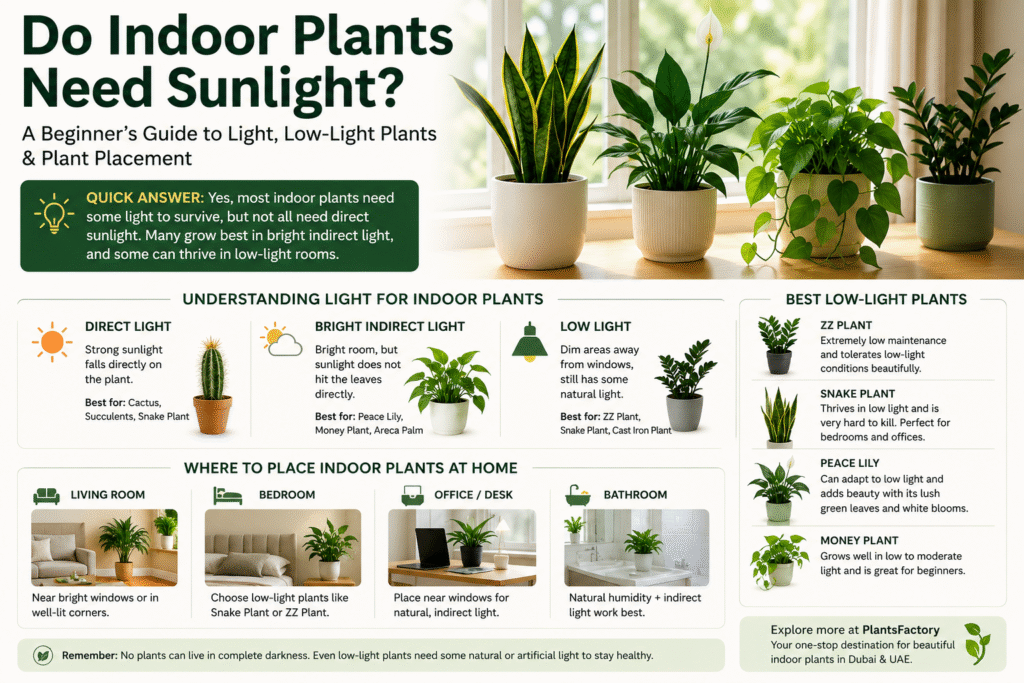
No, not all indoor plants need direct sunlight. In fact, many popular indoor plants can struggle if they are placed in harsh afternoon sun.
Plants like Peace Lily, Money Plant, and ZZ Plant usually prefer bright indirect light rather than direct sunlight. Too much direct sun can burn the leaves, fade their color, or make the soil dry too quickly.
Plants that usually prefer bright indirect light:
- Money Plant
- Peace Lily
- ZZ Plant
- Areca Palm
- Plants that can tolerate brighter conditions:
- Snake Plant
- some succulents
- cactus varieties
So if you’ve been wondering do indoor plants need sunlight, the better question is: what kind of sunlight does your plant need?
How Much Sunlight Do Indoor Plants Need?
This depends on the type of plant, but most indoor plants do well with 4–6 hours of bright indirect light a day.
Here’s a simple guide to how much sunlight indoor plants need:
| Light Type | What It Means | Best For |
|---|---|---|
| Direct sunlight | Strong sun rays directly on the plant | Snake Plant, cactus, some succulents |
| Bright indirect light | Bright room, but no direct sun on leaves | Peace Lily, Money Plant, Areca Palm |
| Low light | Dim room or space away from windows | ZZ Plant, Snake Plant, some low-light plants |
If you’re not sure whether a room gets enough light, look at how bright it feels during the day. A room can still be good for plants even if sunlight doesn’t directly hit the leaves.
Can Indoor Plants Survive Without Sunlight?
This is one of the most common questions, and the honest answer is:
Indoor plants can survive in low light, but no plant can live forever in complete darkness.
That’s why the phrase indoor plants that need no sunlight can be a little misleading. What people usually mean is plants that can survive in low-light rooms or rooms without direct sunlight.
For example:
- a ZZ Plant can tolerate very low light
- a Snake Plant can handle dim corners better than many other plants
- a Peace Lily can adapt to lower light, though it may bloom less
If a room has zero natural light at all, even low-light plants may struggle over time unless you use artificial grow lights.
What Is the Difference Between Direct Light, Indirect Light, and Low Light?
Understanding this will make indoor plant care much easier.
What is direct light?
Direct light means sunlight falls straight onto the plant, usually from a sunny window where the rays hit the leaves directly.
What is bright indirect light?
Bright indirect light means the room is bright, but the sun is not directly touching the plant. This is the ideal lighting for many indoor plants.
What is low light?
Low light means the plant is in a room that still gets some natural brightness, but it’s farther away from windows or in a darker corner.
A simple way to think about it:
- direct light = strong sun on the leaves
- indirect light = bright room, no direct sun
- low light = limited natural brightness, but not complete darkness
Which Indoor Plants Grow Best in Low Light?
If your home doesn’t get a lot of sun, don’t worry. There are still many best indoor plants for low light that can work beautifully in apartments, bedrooms, and offices.
Some of the best low-light indoor plants include:
- ZZ Plant One of the easiest low-light plants for beginners. It tolerates dim rooms and doesn’t need frequent watering.
- Snake Plant A very popular plant for homes and offices. It can handle low light, though it also adapts well to brighter spots.
- Peace Lily A great choice if you want something elegant and soft-looking. It prefers indirect light but can adapt to lower-light rooms.
- Money Plant A beginner-friendly option that works well in bright indirect light and can tolerate moderate low-light conditions too.
Related blog: Best Low Light Plants in UAE by PlantsFactory.
Are There Small Indoor Plants That Don’t Need Sunlight?
Again, no plant truly needs “no light,” but there are definitely small indoor plants that don’t need sunlight directly and can do well in low-light homes.
Some good compact choices include:
- small Snake Plant varieties
- compact ZZ Plant
- Money Plant in small pots
- Peace Lily in tabletop sizes
These are especially good for:
- apartment shelves
- bedroom side tables
- office desks
- entryway corners
If you want to target the keyword small indoor plants that don’t need sunlight, this section is a strong place to do it naturally.
Where Should You Place Indoor Plants at Home?
Plant placement matters just as much as watering. Even a low-maintenance plant can struggle if it’s kept in the wrong spot.
Best places to keep indoor plants at home
Near east-facing or north-facing windows
These spots usually offer soft, bright light that works well for many indoor plants.
In bright living rooms
Living rooms often have the best natural light, making them a great place for Money Plant, Areca Palm, and Peace Lily.
In bedrooms with indirect light
Snake Plant and ZZ Plant are both great bedroom plants for low light because they tolerate dimmer spaces better than many other houseplants.
On office desks near windows
A little natural brightness is enough for many beginner plants.
Related Links
- Best Plants for Bedroom in Dubai for Better Sleep & Relaxation
- Indoor Plants in Dubai by PlantsFactory
- Best Plants for Home Décor: A Room-by-Room Guide
What Will Happen If a Plant Doesn’t Get Enough Light?
When a plant isn’t getting enough light, it usually starts showing signs slowly.
Common signs your indoor plant needs more light:
- slow or no new growth
- yellowing leaves
- drooping stems
- smaller leaves than usual
- leaning toward the window
If you notice these signs, move the plant closer to a brighter area or rotate it to a better spot.
What Happens If a Plant Gets Too Much Sunlight?
Too much direct sunlight can be just as harmful as too little light.
Signs your plant is getting too much sun:
- crispy brown leaf edges
- faded leaf color
- dry soil too often
- scorched or burnt-looking patches
Plants like Peace Lily and Money Plant are more likely to struggle in harsh direct sun than plants like Snake Plant.
Which Indoor Plants Are Best for Apartments With Low Light?
If you live in an apartment with limited sunlight, focus on plants that are flexible and easy to maintain.
Great indoor plants for apartments include:
- ZZ Plant for dark corners
- Snake Plant for bedrooms and shelves
- Money Plant for bright corners and tabletops
- Peace Lily for soft indirect light
- compact palms for brighter living spaces
This also makes a good place to link to product pages for:
- Snake Plant
- ZZ Plant
- Peace Lily
- Money Plant
What’s the Best Beginner Rule for Indoor Plant Light?
If you remember one simple rule, make it this:
Don’t force a bright-light plant into a dark room, and don’t put a shade-loving plant into harsh direct sun. Start by looking at your home:
- bright living room = more plant options
- dim bedroom = choose low-light plants
- desk near a window = great for easy indoor plants
- dark corner = choose the toughest low-light plants only
Once you do that, indoor plant care becomes much easier.
Final Thought
So, do indoor plants need sunlight? Yes — but not always direct sunlight.
The best way to keep indoor plants healthy is to understand the type of light your home gets and choose plants that suit that environment. If your home has bright rooms, you have more options. If your space is darker, choose reliable low-light plants like ZZ Plant, Snake Plant, Peace Lily, or Money Plant.
Once you understand how much sunlight indoor plants need and where to place them, plant care becomes much less confusing. A little light knowledge really does go a long way.